

Nawabganj Bird Sanctuary is a wetland reserve in Unnao district, Uttar Pradesh, on the Lucknow–Kanpur Highway. For a day out from Lucknow, you can combine its freshwater lake and marshland with birdwatching along a cycle track; it is about 40.4 km from a three-star hotel in Lucknow.
- Setting: A permanent freshwater lake and adjoining marshland across 224.60 hectares.
- Birding season: November to February is considered the best time to visit.
- Road access: The sanctuary is about 43 km from Lucknow by road.
- Opening hours: 07:00 AM to 05:00 PM, according to Incredible India; confirm before travelling.
Why visit Nawabganj Bird Sanctuary?
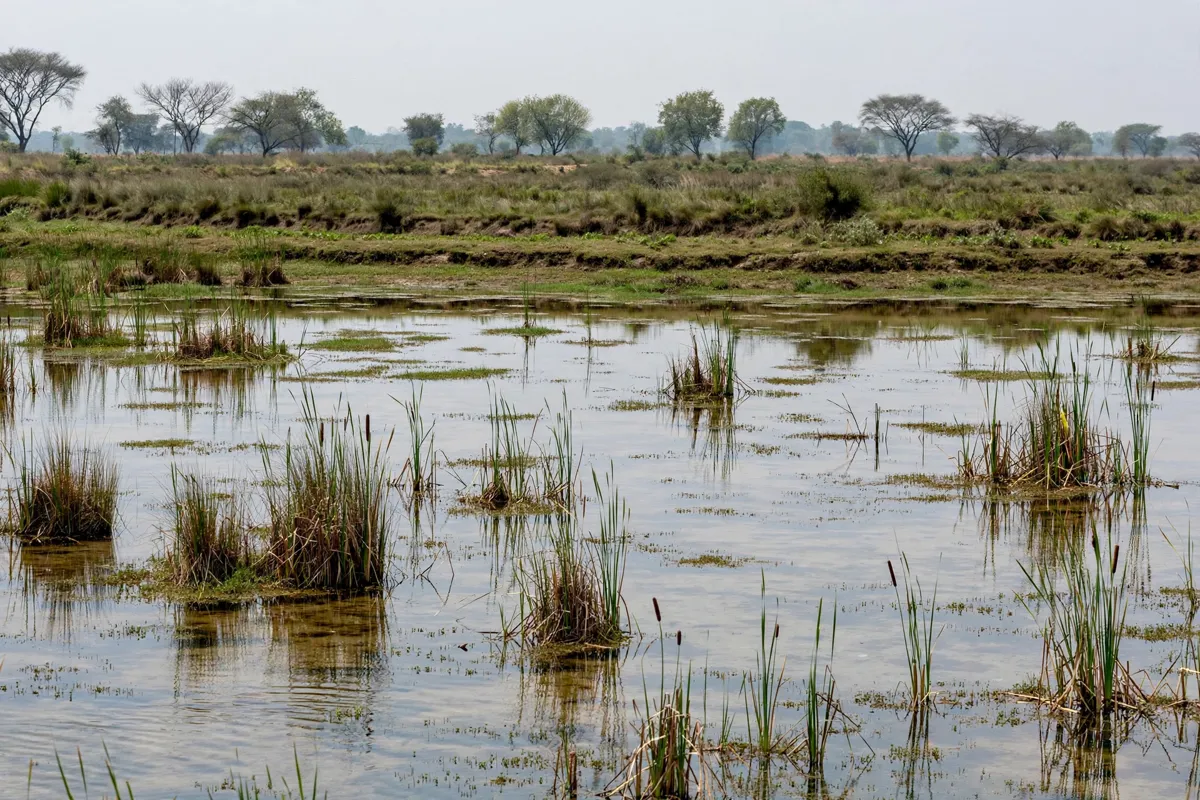
Nawabganj Bird Sanctuary brings a freshwater lake, marshland and bird habitat together in one protected area. The sanctuary is also called Shaheed Chandra Shekhar Azad Bird Sanctuary; Nawabganj Bird Sanctuary was its former name.
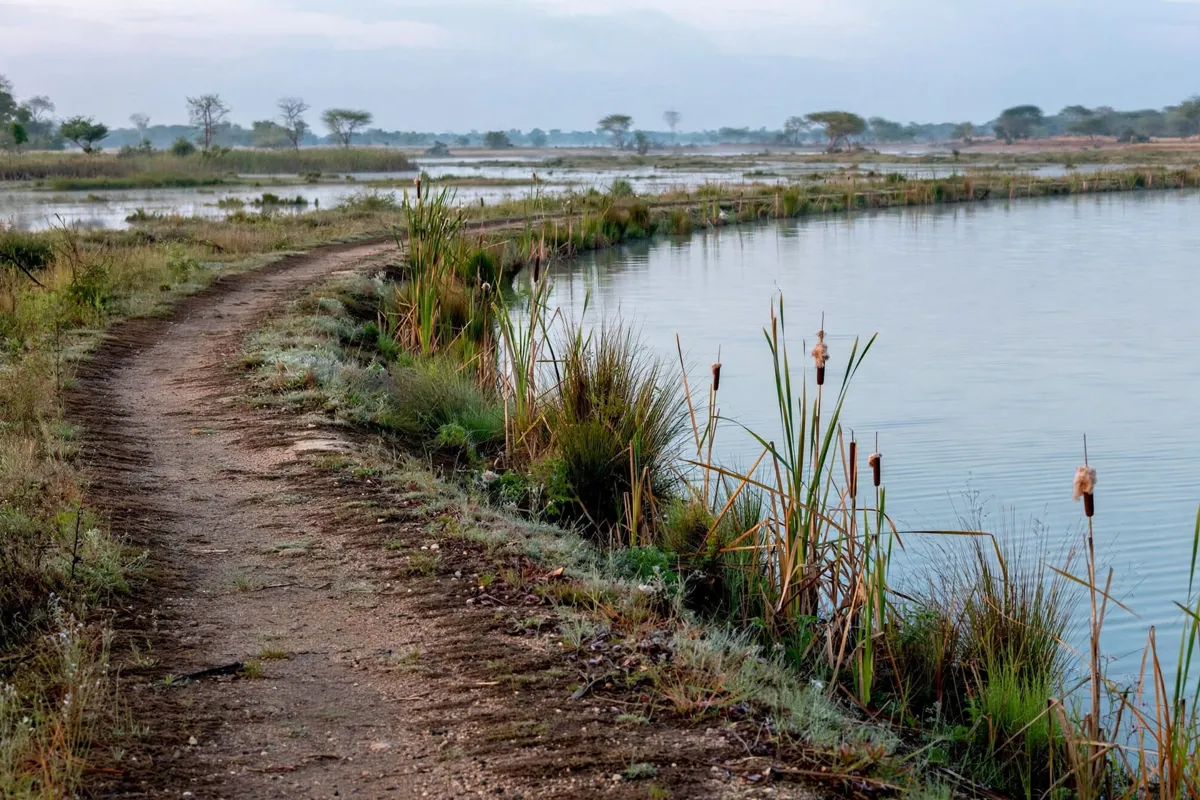
The Uttar Pradesh Eco-Tourism site identifies wetland, birding and a deer park among its natural attractions. A cycle track provides a route for birdwatching, so you can take in the wetland landscape while looking for birds in the surrounding habitat.
The Ramsar Sites Information Service describes 25,000 waterbirds as regularly recorded at the site and reports 220 resident and migratory bird species documented. Those figures give a sense of the sanctuary’s importance as a wetland, though sightings can vary.
When is the best time for birding?
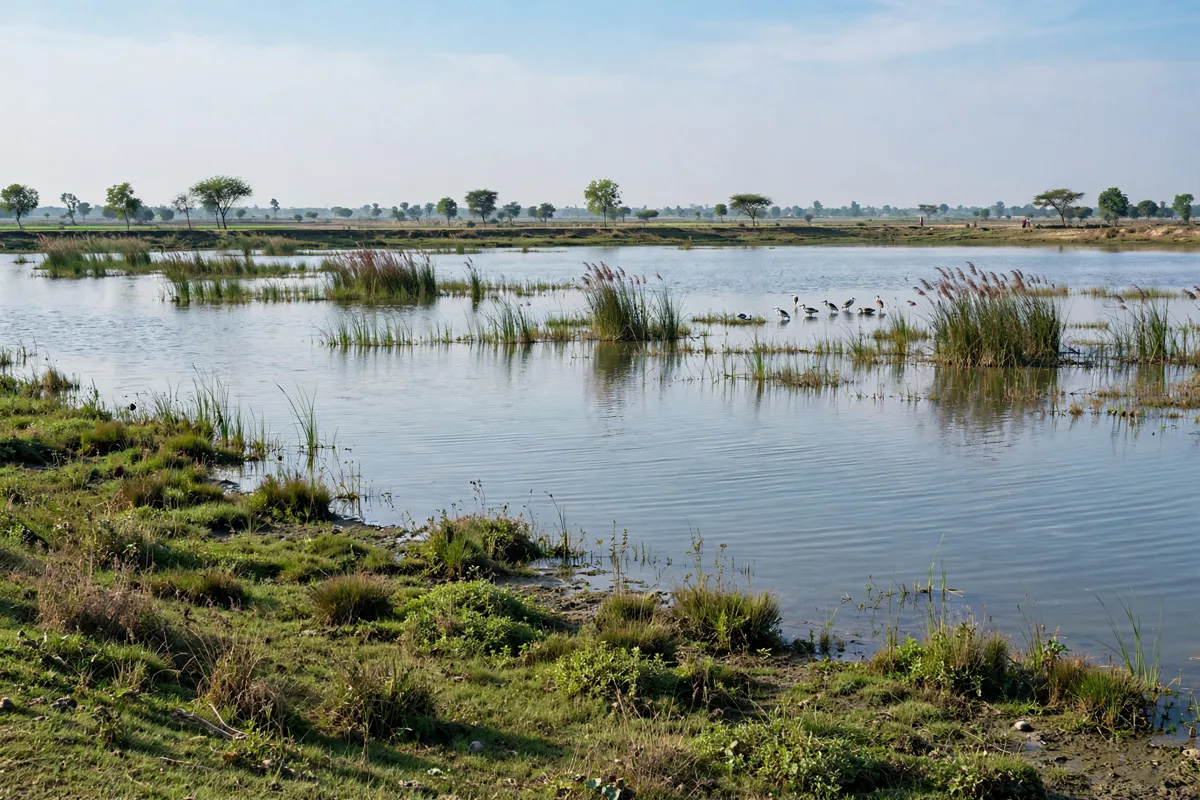
Winter is the strongest season for migratory birds at the sanctuary. November to February is considered the best time to visit, and many local and migratory birds arrive in winter.
Migratory birds begin leaving with the onset of spring, with their departure complete by the second week of March. If seeing winter migrants is a priority, plan within the recommended months rather than later in spring.
Migratory species include Greylag Goose, Pintail, Red-crested Pochard, Gadwall, Coot and Mallard. Resident birds include Sarus Crane, Painted Stork, Black-crowned Night Heron, Open-billed Stork, White Stork, Peacock, White Ibis and Dabchick. Other species include jacanas, Purple Moorhen, Lapwing, Tern, Wigeon, Indian Roller and Bee-eater.
How do you get from Lucknow to Nawabganj Bird Sanctuary?
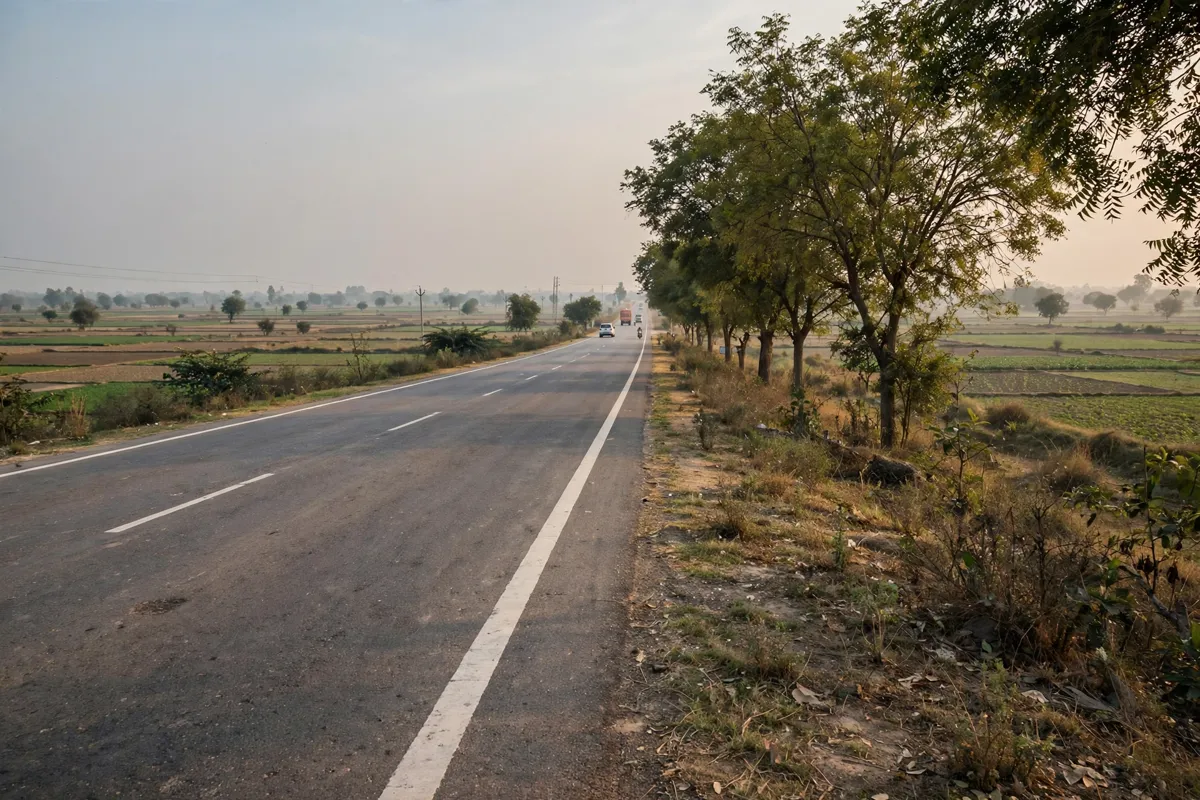
The sanctuary lies on National Highway 25, the Lucknow–Kanpur Highway, making a road journey from Lucknow the straightforward way to plan the day trip. It is about 43 km from Lucknow and 44 km from Kanpur by road.
For public transport connections, Nawabganj bus station is 1 km from the sanctuary and Kusumbi railway station is 2 km away. Lucknow airport is the nearest airport; Chaudhary Charan Singh International Airport is about 30 km from the sanctuary.
If you are arriving by air, the journey from Chaudhary Charan Singh International Airport to Lucknow is a separate leg to plan.
Allow time to arrange the final leg from the bus station or railway station, since those distances end at the sanctuary rather than describing a complete door-to-door route. Organized excursions are another transport possibility through the Uttar Pradesh Eco-Tourism Development Board.
What are the opening hours and entry details?
Incredible India gives the sanctuary’s opening hours as 07:00 AM to 05:00 PM. Hours and entry arrangements can change, so check the official site before you go.
Confirm the current entry fee and any access requirements before setting out, rather than assuming entry is free or that every area is open.
What should you prepare for the day?
Plan around the season and the outdoor setting: the sanctuary area’s stated temperature range runs from a winter minimum of 4°C to a summer maximum of 48°C. Check conditions for your travel date and choose clothing accordingly.
Leave time for both the wetland and the birdwatching cycle track, and check visitor access before counting on the deer park as part of your visit. For a separate city outing, Lucknow parks and the Gomti Riverfront offer places to visit beyond the sanctuary.
FAQs
What is Nawabganj Bird Sanctuary also called?
It is also known as Shaheed Chandra Shekhar Azad Bird Sanctuary. Nawabganj Bird Sanctuary is its former name.
When do migratory birds leave?
Their departure begins with the onset of spring and is complete by the second week of March.
Is there a cycle track at the sanctuary?
Yes. Birdwatching along a cycle track is a visitor activity at the sanctuary.